
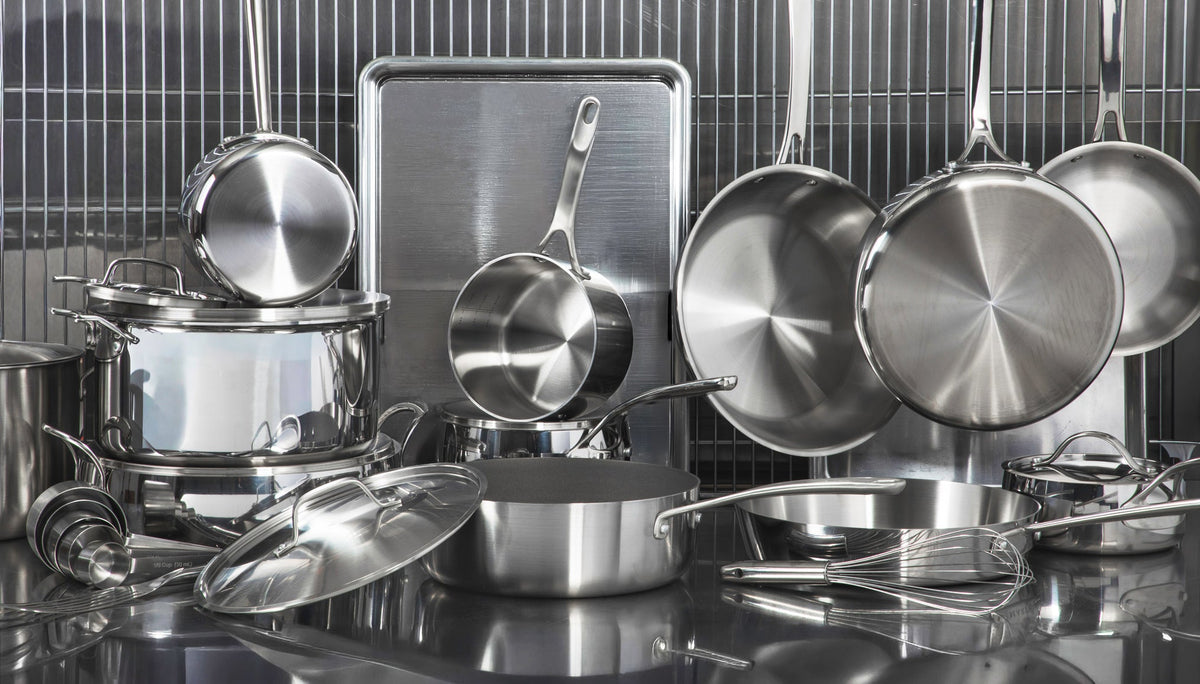
There's something timeless about stainless steel cookware. The clean lines, the satisfying weight in your hand, and a finish to suit every kitchen: a mirror polish that gleams under the lights, a soft satin finish with a subtle, understated glow, or a brushed finish with fine grain lines for a more modern, professional look. Whether it's hanging from a pot rack or sitting on the stovetop, a stainless pan brings a quiet sense of elegance to the kitchen that never goes out of style.
And its beauty goes well beyond looks. Stainless steel is built to last, works with a wide range of cooking techniques, and becomes second nature the more you cook with it. From a golden sear on a weeknight chicken dinner to a silky pan sauce for a special occasion, it's the kind of cookware that grows with you as a cook.
Like any classic, it rewards a little know-how. Let's explore how stainless steel works and the simple techniques that will help you cook with confidence.
Why Stainless Steel Cooks the Way It Does
Stainless steel on its own is durable and non-reactive, which means it won't pick up metallic flavors from acidic ingredients like tomatoes, wine, or citrus. What it isn't, by itself, is a great conductor of heat.
That's why most quality stainless cookware is built in layers. A core of aluminum or copper, which spreads heat quickly and evenly, is bonded to stainless steel. Some pans have this layered base only on the bottom (an "encapsulated" or "impact-bonded" base). Others are "clad," with the layers running all the way up the sides for more even heating throughout.
Either way, the result is a pan that heats steadily, holds that heat well, and responds when you adjust the burner. Understanding that one quality is the key to everything that follows.

In this photo: Babish 10-Piece Professional Tri-Ply Stainless Steel Cookware Set
The Golden Rule: Preheat First, Then Oil
If you remember only one thing from this post, make it this: let the pan get hot before you add oil or food. Food sticks to stainless when it hits a pan that isn't ready. A properly preheated pan helps proteins sear and release on their own.
- Heat the empty pan. Place it over medium heat for about 2 to 3 minutes. Resist the urge to crank it to high; stainless holds heat well, and medium is usually plenty.
- Try the water test. Flick a few drops of water into the pan. If they sizzle and evaporate right away, it's not quite ready. When the drops bead up into little balls that glide across the surface, you're there.
- Add your oil. Wipe out any water, then add a thin layer of oil. Within a few seconds it should look shimmery and flow easily when you tilt the pan.
- Add your food. Pat proteins dry first, since surface moisture leads to steaming and sticking. Lay the food in and you should hear a steady sizzle.
- Be patient. Here's the part most people skip. When you first add meat or fish, it will stick. Leave it alone. As a crust forms, it naturally releases from the pan. If it's still clinging, give it another minute.

In this photo: Oster Platinum Sedwick 10-piece Stackable Stainless Steel Cookware Set
What Stainless Steel Does Best
Stainless shines when you want color, crust, and flavor. Here's where it really earns its spot on the stove.
Searing. Steaks, chicken thighs, pork chops, and scallops develop a deep golden crust in a well-preheated stainless pan. That browning is where so much of the flavor lives.
Sautéing. Vegetables, aromatics, and quick stir-fries cook evenly and pick up nice caramelization. Keep things moving and don't overcrowd the pan.
Pan sauces. This is stainless steel's secret weapon. After searing, those browned bits left in the pan (chefs call them fond) are packed with flavor. Pour in a splash of wine, stock, or even water, scrape the bottom with a wooden spoon, and you've got the base for a rich sauce in minutes. Finish with a pat of butter and fresh herbs.
Stovetop to oven. Many stainless pans are oven-safe, making them ideal for dishes that start with a sear and finish in the oven. Always check your cookware's care instructions for its specific oven-safe temperature, especially if it has handles or lids made of other materials.
Simmering and boiling. Because stainless is non-reactive, it's a great choice for tomato sauces, soups, stocks, and pasta.
One note: for very delicate foods like eggs or thin fish fillets, stainless is doable with practice and enough fat, but a nonstick pan is often the easier choice.

Cleaning and Care
One of the best things about stainless steel is how much it can take. A little care keeps it looking great for years.
Deglaze while it's warm. For stuck-on bits, add some water to the pan while it's still warm and let it simmer for a minute or two. Most residue will lift right off with a wooden spoon or spatula. Avoid plunging a hot pan into cold water, which can cause warping.
Scrub with confidence. Stainless can handle a non-scratch scrubbing pad and regular dish soap. Skip steel wool, which can leave scratches.
Tackle discoloration. Rainbow-tinted spots (called heat tint) or cloudy white residue from hard water are common and harmless. A splash of white vinegar takes care of water spots, and a paste of baking soda and water or a stainless steel cleanser brings back the shine.
Dry thoroughly. Hand-drying right after washing helps prevent water spots.
Check the dishwasher guidance. Many stainless pans are labeled dishwasher-safe, but handwashing is often recommended to keep the finish looking its best. Follow the care instructions that came with your cookware.
Practice Makes Perfect
Cooking with stainless steel is less about the pan and more about building a few good habits: preheat, oil, add your food, and let it be. The first few tries might take a little patience, but soon you'll be searing like a pro and whipping up pan sauces you'd be proud to serve to guests.
So pull that stainless pan out from the back of the cabinet. With a little heat and a little patience, it might just become your favorite pan in the kitchen.