
Part 1: Why It Works and How to Season It
There's a reason cast iron skillets outlive their owners. Somewhere in a grandmother's kitchen drawer or hanging on a farmhouse wall, there's a pan that's been in continuous use for fifty, sixty, even a hundred years — still cooking better than the day it was made. No nonstick coating can make that claim. If you've ever wondered what all the fuss is about, or you've inherited a rusty pan and don't know where to start, this two-part guide covers everything you need to know. Part one gets into why cast iron holds up so well, how to build (or restore) its seasoning, and how to choose your first piece. Part two covers day-to-day care, what to cook, and common myths worth retiring.
Why Cast Iron Still Matters
In a kitchen full of nonstick, ceramic, and stainless options, cast iron earns its place for a few simple reasons:
It holds heat like nothing else. Cast iron has exceptional heat retention, which means once it's hot, it stays hot — even when you drop in a cold steak or a pile of vegetables. That's what gives you a deep, even sear that thinner pans struggle to match.
It's virtually indestructible. Drop it, scrape it, leave it on the stove a beat too long — cast iron shrugs it off. There's no coating to chip or scratch off into your food.
It goes anywhere heat does. Stovetop, oven, campfire, grill — cast iron doesn't care. Few other pans can go from stovetop to a 500°F oven without a second thought.
It gets better with use. Unlike nonstick pans that degrade over time, a well-maintained cast iron pan actually improves as its seasoning builds up, developing a naturally slick cooking surface.
Pre-Seasoned Cast Iron vs. Enameled Cast Iron
Before going further, it's worth splitting cast iron into its two main types, because they behave differently in the kitchen and ask for different care.
Pre-seasoned cast iron is the classic version: iron that ships with a seasoning layer and builds on it through regular cooking and oiling. It's typically less expensive, handles the highest heat of any pan in the kitchen, and is what most people picture when they think “cast iron skillet.” The tradeoff is upkeep — it needs ongoing seasoning maintenance, careful drying, and a bit more attention than other cookware.

In the photo: Oster Flintfield Pre-seasoned Cast Iron Skillet
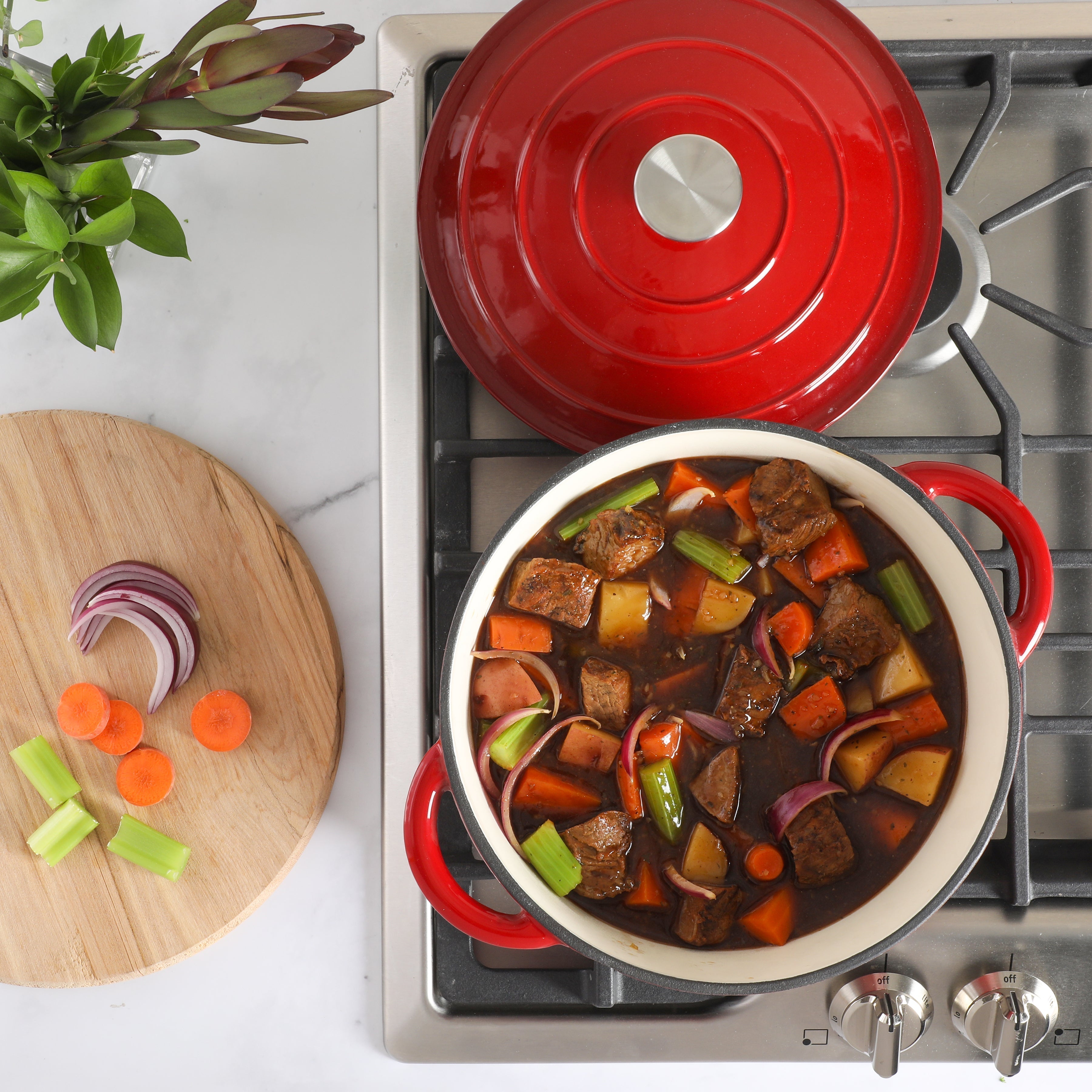
Enameled cast iron has a glass-like coating fused over the iron, most familiar in Dutch ovens from brands like Crock-Pot, Babish, or Martha Stewart's cookware line. That coating means no seasoning to maintain, no rust to worry about, and no reaction with acidic ingredients — so tomato sauces, wine braises, and citrus-based dishes are all fair game. It also comes in color, which pre-seasoned iron doesn't. The tradeoffs: it's generally pricier and the enamel can chip if it's dropped or knocked against something hard.

In the photo: Martha Stewart Gatwick Enameled Cast Iron Dutch Ovens
Neither is strictly better — many kitchens end up with both, using pre-seasoned iron for searing and high-heat cooking, and enameled for soups, braises, and anything with a lot of acid or liquid.
Seasoning: The Heart of Cast Iron
This section is specifically about pre-seasoned cast iron — enameled pans skip seasoning altogether, since the enamel coating itself is the cooking surface.
“Seasoning” is the layer of polymerized oil baked onto the iron's surface. It's what makes cast iron naturally nonstick and what protects it from rust. Understanding seasoning is the single most important thing to know about owning this type of cast iron.
New pans come with a seasoning layer already applied, but that's just a starting point. The more you cook with it — especially with a bit of oil or fat — the more that seasoning builds and improves.
To season or re-season a pan:
1. Wash the pan with warm water and a little mild soap (contrary to old myths, a bit of soap is fine — it's harsh scrubbing and soaking that's the real enemy).
2. Dry it completely, then heat it on the stove for a minute or two to drive off any remaining moisture.
3. Apply a very thin layer of a high smoke-point oil (vegetable, canola, or flaxseed oil are common choices) with a paper towel — thin enough that it doesn't look glossy or greasy.
4. Place it upside down in a 450–500°F oven for about an hour. Let it cool in the oven.
5. Repeat two or three times for a strong base layer.
Choosing Your First Piece
If you're just starting out, a 10- or 12-inch pre-seasoned skillet is the most versatile choice — big enough for a family meal, small enough to handle comfortably. From there, a Dutch oven or a grill pan are natural next additions, covering braising, baking, and stovetop grilling.

In the photo: bloomhouse Pre-seasoned Cast Iron Grill Pan
If low-maintenance matters more to you than budget, an enameled Dutch oven is often the better first piece — it skips the seasoning routine entirely and handles soups, stews, and tomato-based dishes without a second thought. Many people end up owning both: a pre-seasoned skillet for searing and everyday stovetop cooking, and an enameled piece for anything acidic, liquid-heavy, or simmered for a long time.

In the photo: Sur La Table Kitchen Essentials Main Canteen Enameled Cast Iron Everyday Pan with Borosilicate Glass Lid
Whichever you choose, look for pans with a smooth, even cooking surface, a sturdy handle, and — if you plan to move between stovetop and oven often — a helper handle on the opposite side for easier lifting.
The Long Game
The real magic of cast iron is that it's not a purchase, it's an inheritance in the making. With basic care, a single pan can realistically outlast its owner, carrying decades of seasoning and countless meals in its dark, slick surface. Treat it well, and it will quietly outperform pans that cost twice as much and last a fraction as long.
Continue to Part 2 for everyday care, what to cook, and common myths worth retiring.